

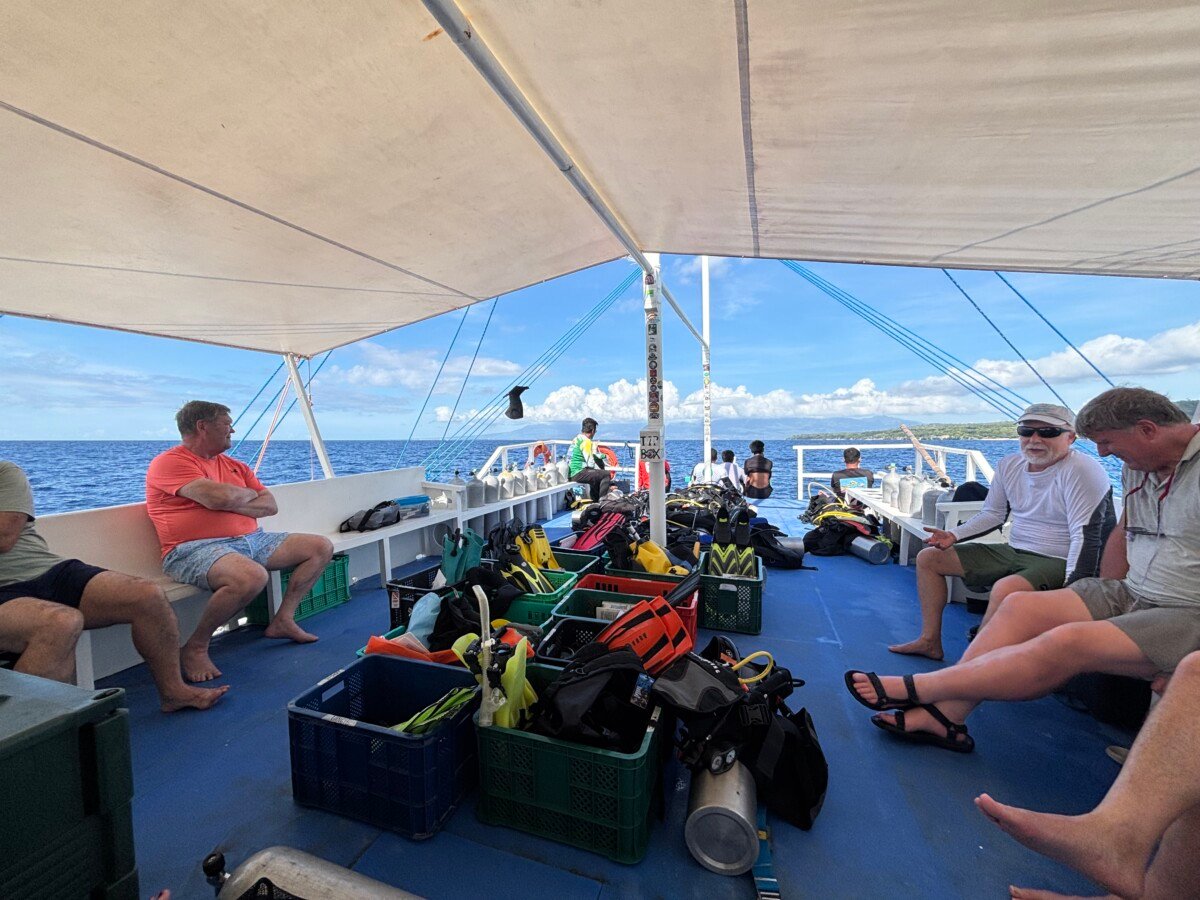
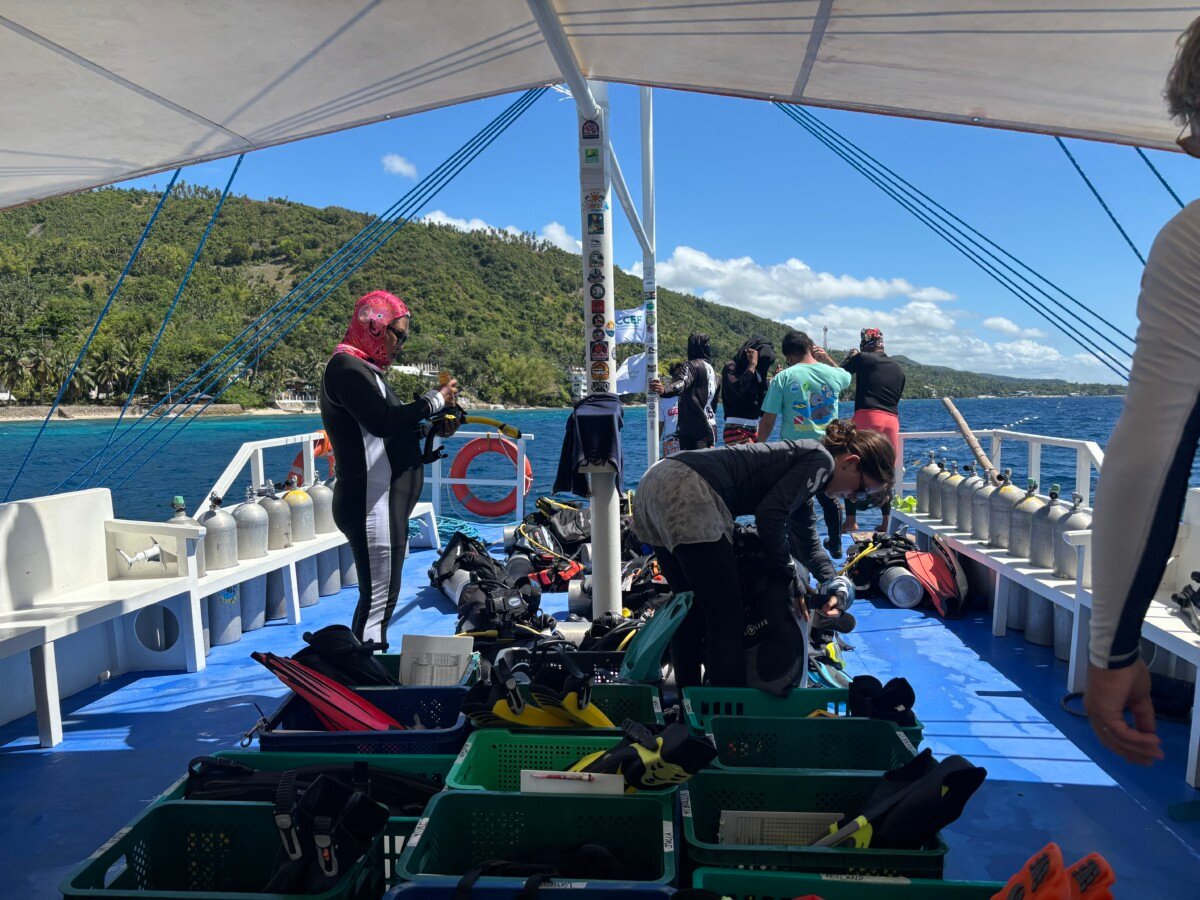
Expedition Summary
For over 30 years Dr Alan White, and the Coastal Conservation and Education Foundation that he founded, have organized annual volunteer surveys of Marine protected Areas (MPAs) in the Philippines, most of which were established by the foundation over the years. The initial goal of the MPA program was to support local communities to engage in sustainable fishing practices by providing protected habitats for the entire food chain that results in healthy fish stocks outside the MPAs. They have also played a role in eliminating unsustainable fishing practices such as the use of cyanide, dynamite and bottom trawling.
Through their work, CCEF has provided clear, scientifically backed, evidence of the success of the programs, a key ingredient in educating and garnering the support of local barangay governments and communities who are charged with their protection. Their work is ongoing, but now also takes them to the realms of mangrove planting, reef rehabilitation and ecotourism support.
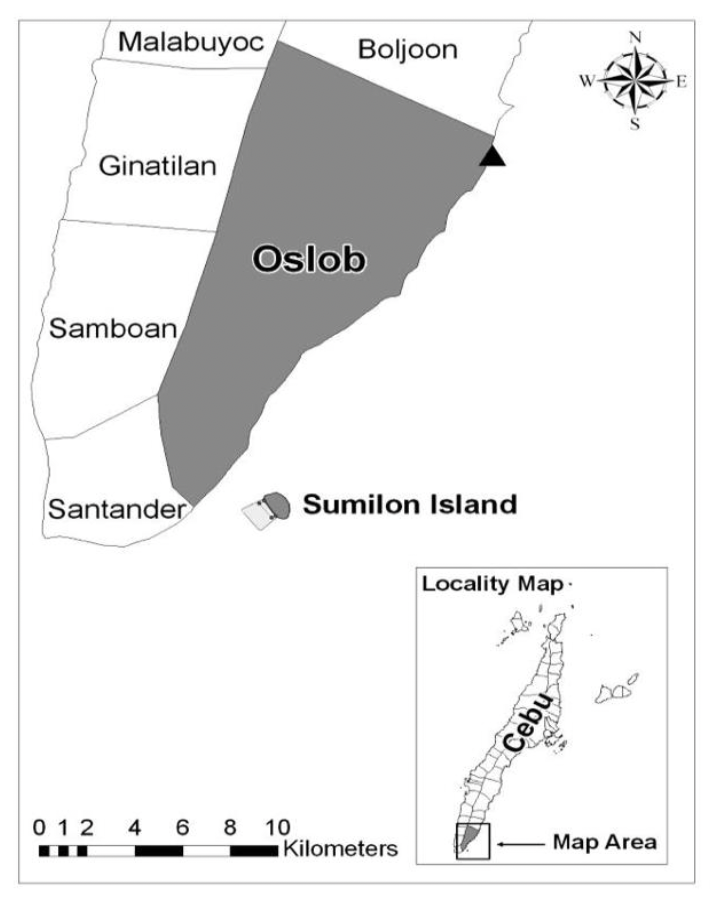
For 2026, the team ran their annual survey between May 3rd, and May 10th based on Sumilon Island. The Island is off the southeast coast of Cebu, and the surveys incorporated marine parks around the Island itself as well as off the coasts of the Oslob and Boljoon barangay. Initiated by Dr. Angel Alcala the Sumilon Island MPA has the honour of having the very first Filipino MPA being established in 1974. Although the oldest, it is not the longest continuously running MPA, with that record going to nearby Apo Island. The reason demonstrates the intersection of politics and the environment. Despite the fish yield available outside the MPA doubling by the 1980s, a change in government led to the fisherfolk being given open slather to remove all the fish in the marine parks. This was later reversed and protection resumed in the early 1990s. A 1999 SPR survey reported some improvement however the park felt the cost many years.
The international volunteers assess the presence of several different varieties of coral (both living and dead), sponges, invertebrates, sea grass and algae in surveys that capture data inside and outside the park. This enables comparative studies of the effect of protected areas. The presence or absence of the various species provides a timeline of where the reef lies in its habitat development. At the same time, other members of the team measure the abundance of the various fish species, paying particular attention to the butterfly fish which are used as indicator species providing early evidence in changes to their environment.
The results will be reported later in the year, however, anecdotally it was clear that nearly all of the reefs were being protected by diligent and active local communities with only one clear example of destruction caused by humans in evidence. Unfortunately, the same can’t be said for mother nature as there were several examples of typhoon damage.
Along with the formal annual report later this year, Alan et al. intends to publish a paper looking at the changes which have occurred over the lifetime of the data.
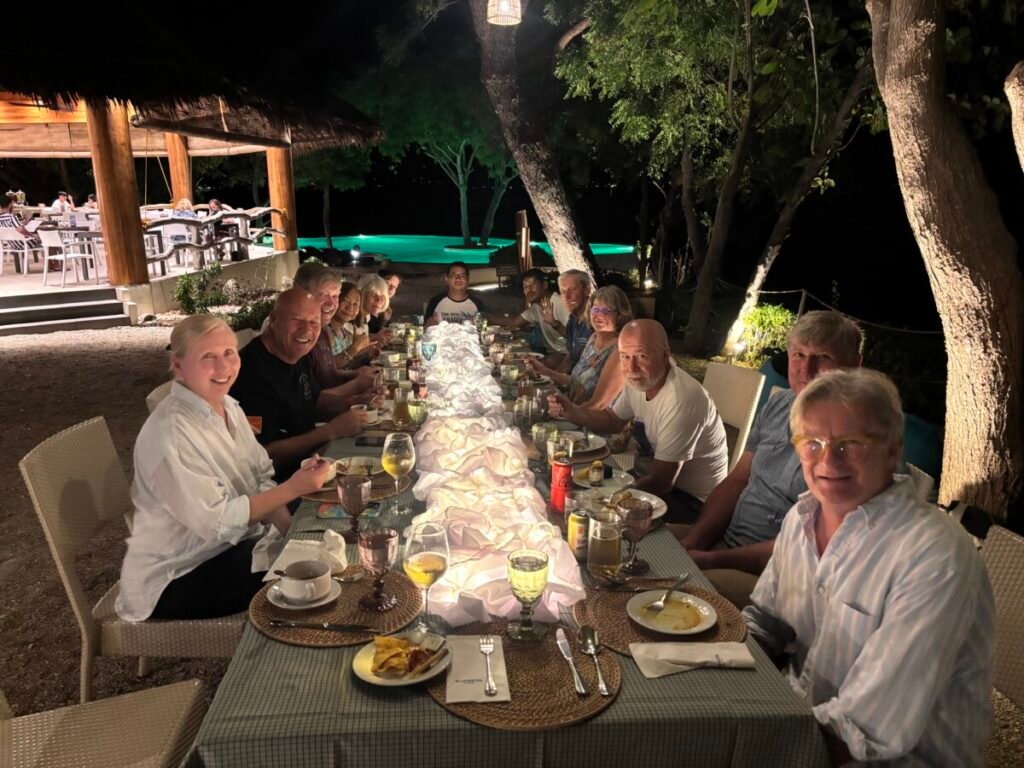
The Organisation
Coastal Conservation & Education Foundation
Coastal Conservation and Education Foundation is a non-profit organisation dedicated to the management and sustainable use of Philippine coastal resources through active leadership and participation of coastal communities and stakeholders. Driven by its passion to create sustainable coasts and actively engage communities, CCEF develops and disseminate tools, techniques and research for better marine management, while promoting integrated coastal management approach that includes marine protected areas (MPAs) localized law enforcement and other participatory best practices.
Find out more info here: https://www.coast.ph/
Partners